Written by Kevin Folta

We are currently witnessing the USDA public commentary period on the Arctic Apple, a transgenic apple that does not exhibit browning upon injury or cutting. The anti-browning trait was installed by scientists at Okanagan Specialty Fruits. A copy of the apple gene for polyphenol oxidase (PPO) was overexpressed, which triggers a plant response to silence the over-expressed gene. The same process also suppresses the apple’s endogenous PPO genes. Without this protein, the apple flesh will not brown when you cut it.
After a decade of assessment and testing for over a decade, the trees are poised for widespread adoption. But like clockwork, the critics have now emerged against this non-browning apple. They say that the apples are untested in humans, that the pollen will contaminate other plants. They say that it is unnatural and will need more pesticide. There is a feeling of reaching for any excuse to be anti-Arctic Apple.
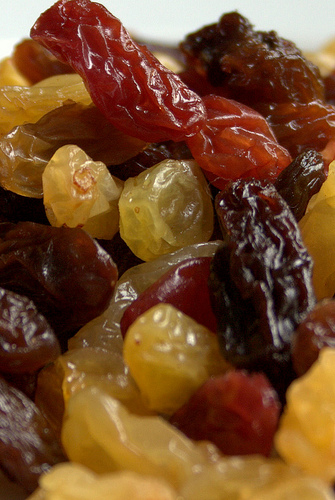
The same criticisms were strangely silent against a parallel genetic alteration in grape. A genetic alteration damaged the normal expression of the PPO gene in the ‘Sultana’ grape, a genetic change that was unknown, uncharacterized and un-investigated. All the scientists knew is that the grape didn’t brown. The resulting grape exhibited the same anti-browning properties as the current Arctic Apple, and gained rapid favor for the production of light-colored raisins and low-oxidation wines. Unlabeled and untested, this genetic aberration spread quickly throughout the dried-grape industry, as consumers and farmers realized great gains from the sweet, white and golden raisins.
Worse, it turns out that scientists later deciphered the molecular basis for the disorder. The normal PPO protein was unprocessed, a new protein created! Just like the anti-GMO folks warn us about all the time, the new protein, untested for allergenicity and long-term feeding consequences, accumulated in the modified Franken-fruit background. This new freakish protein was the unnatural reason that the grapes did not brown, and the raisins remained white or golden.
The Punchline: You’ve likely eaten them. You might have even bought them at an organic market. You never cared.
In fact, the PPO mutant occurred spontaneously in 1962 in a grape line called “Sultana”. A mutation in the grapevine changed a gene so that the PPO oxidase protein (the one suppressed in Arctic Apple) could not be processed and made functional. The fruits were pale and exhibited a significant decrease in PPO activity.
Why? The active PPO enzyme is about 40 kilodaltons in size, but in ‘Bruce’s Sport’, the ppo mutant, the protein was not processed from its original 60 Kd size. The modified protein was not a functional PPO. A new protein was formed and caused the lack of browning. How did this mutant atrocity ever escape regulation? Surely Monsanto ram-rodded this through the FDA and USDA!
Not so much.
In fact, not at all.
The PPO mutant was found in 1962. Nobody cared about why the grapes didn’t brown, they just knew was a great trait for farmers and consumers. In 1992 scientists finally figured out that the non-browning trait was caused by the fact that a new unprocessed protein was formed in the plant, an unprocessed form of PPO that could not participate in the browning process.
1962. New changes in genes, new proteins formed. All untested, unlabeled, and accepted as perfectly fine; happy golden raisins to go with your granola. De-lish.
Turn ahead to 2012. The exact same gene is suppressed in apples with great precision. A group of people object to the process. They worry about allergies, cross-pollination and GMO Franken-dangers.
Questions
Why was this process completely acceptable when unknown, unpredictable and untested back in the 1960’s?
Why is the process decried when it is understood, documented and tested now?
These two questions frame an intellectual inconsistency of the anti-GMO movement that I cannot understand, and show that it is not the product, but the process that activists find objectionable.
References
Antcliff, A. & Webster, W. (1962). Bruce’s sport — a mutant of the sultana, Australian Journal of Experimental Agriculture, 2 (5) DOI: 10.1071/EA9620097
Dry, I.B. & Robinson, S.P. (1994). Molecular cloning and characterisation of grape berry polyphenol oxidase, Plant Molecular Biology, 26 (1) 502. DOI: 10.1007/BF00039560
Rathjen, A.H. & Robinson, S.P. (1992). Aberrant Processing of Polyphenol Oxidase in a Variegated Grapevine Mutant, PLANT PHYSIOLOGY, 99 (4) 1625. DOI: 10.1104/pp.99.4.1619
Written by Guest Expert
Kevin Folta has studied biology and agricultural biotechnology for over thirty years. His research examines the role of light in controlling plant traits, especially those relevant to agriculture. His group is known for using innovative genomics approaches to identify genes associated with fruit quality, especially flavors and aromas.


I find that many of the critics of GMOs cannot articulate a real argument about why they disapprove of the genetic modification of plants. The few arguments that do resonate originate from how GMOs have been used by seed companies to protect their breeding investments by declaring them protected intellectual property.
Recently, work by a group in Nanjing showed that miRNAs present in food can pass though the stomach lining into the blood and actually affect regulation of human liver enzymes.
(see Zhang et al. Exogenous plant MIR168a specifically targets mammalian LDLRAP1: evidence of cross-kingdom regulation by microRNA. Nature Publishing Group (2011) vol. 22 (1) pp. 107-126)
This study shows a mechanism by which silencing RNAs present in food can affect human health. The presence of more small RNAs is likely the only way that PPO silencing in “arctic apples” is distinct from the mutation in Sultana grapes. If small RNAs can pass into the bloodstream then RNAi based GMOs should face deeper scrutiny. I think further studies are needed before this is justified, but it is something to think about.
While I personally do not find anything objectionable to GMO foods, I do think that there are more productive things plant scientists can and are doing than making apples not turn brown.
Saul, you raise a very interesting point that raises some questions:
1) Shouldn’t all foods be screened for potentially harmful miRNAs? If not, why not?
2) RNAi is very specific, turning off only genes with sequences that match the sequence of the siRNA. Can you suggest any examples of genes in humans that match PPOs?
3) microRNA is single stranded while small interfering RNA is double stranded. What evidence, if any, is there that ds RNA would behave the same as ss with regard to digestion and potential uptake into the blood?
4) Are we even sure that this one paper is showing what they claim? For another view, check out Plant microRNAs in Your Blood? at Sandwalk, including the comments.
Edit – stay tuned for a post tomorrow that explains, among other things, the value of apples that don’t brown.
Saul, wow, would that open a can of worms!
Are you suggesting that we need to quantify the miRNA content of all crops, all varieties, products of all crosses before allowing those foods to be consumed? That would be a huge blow to plant breeders and others that strive for crop improvement!
Keep in mind that the paper you cite and hold as evidence of potential harm has yet to be expanded on or repeated. Most of all, there are no reports linking plant miRNAs to human/animal disease. If plant micro RNAs are controlling animal physiology, then we would have seen a flood of these papers by now, at least surveys of miRNAs in plasmas.
The original work is super cool conceptually and I’d love for it to pan out and open new areas of science. In terms of approaching biotech, it only opened a new bottomless “well what if” well for those opposed to trangenics.
Saul, in thinking more about this, we’re talking miRNA– that means it will change as the plant’s environment changes. Not only would we have to test every plant, but also every plant grown in organic conditions, under conventional, every day after the product is picked, the product after storage… the possibilities are endless!
And if RNA is really getting through digestion, into the blood and to targeted areas your biggest contributors are not likely transgenic plants, but bacteria and fungi! Granted they don’t make miRNAs per se, but they make RNA, lots of it, and if this is real…
Just some other thoughts.
I dunno Kevin, I think there is a good case that you’d want to check the miRNA to ensure it isn’t likely to interfere with the transcriptome of humans, I don’t think this is opening a can of worms – it can be done in silico in much the same way that allergenicity is done now – GMOs are checked for potential allergenicity this way (it may be a little silly, but its hardly can of worms territory in my mind) and I see no reason one wouldn’t do the same for miRNA (hell I do precisely that when thinking about an miRNA to stick into corn, or soy – but I use the corn or soy transcriptome rather than the human to assess the quantity and quality of hits I might get – its a pretty simple tool that takes a matter of minutes to run, I’d be surprised if the miRNA to PPO hadn’t been passed through such an in silico test just to make sure (if the apple transcriptome is known in any detail it’d surprise me if they hadn’t done the same there to ensure the miRNA designed was specific enough to do only what was wanted)